Decisions create impact.
Research influence isn’t measured by the volume of insights you produce. It happens when you give cross-functional partners a clear model for choices, not just more to think about.
Upstream identifies the specific behavioral barriers that dictate user actions. By showing teams exactly where to focus, we build the shared clarity needed to drive product strategy.
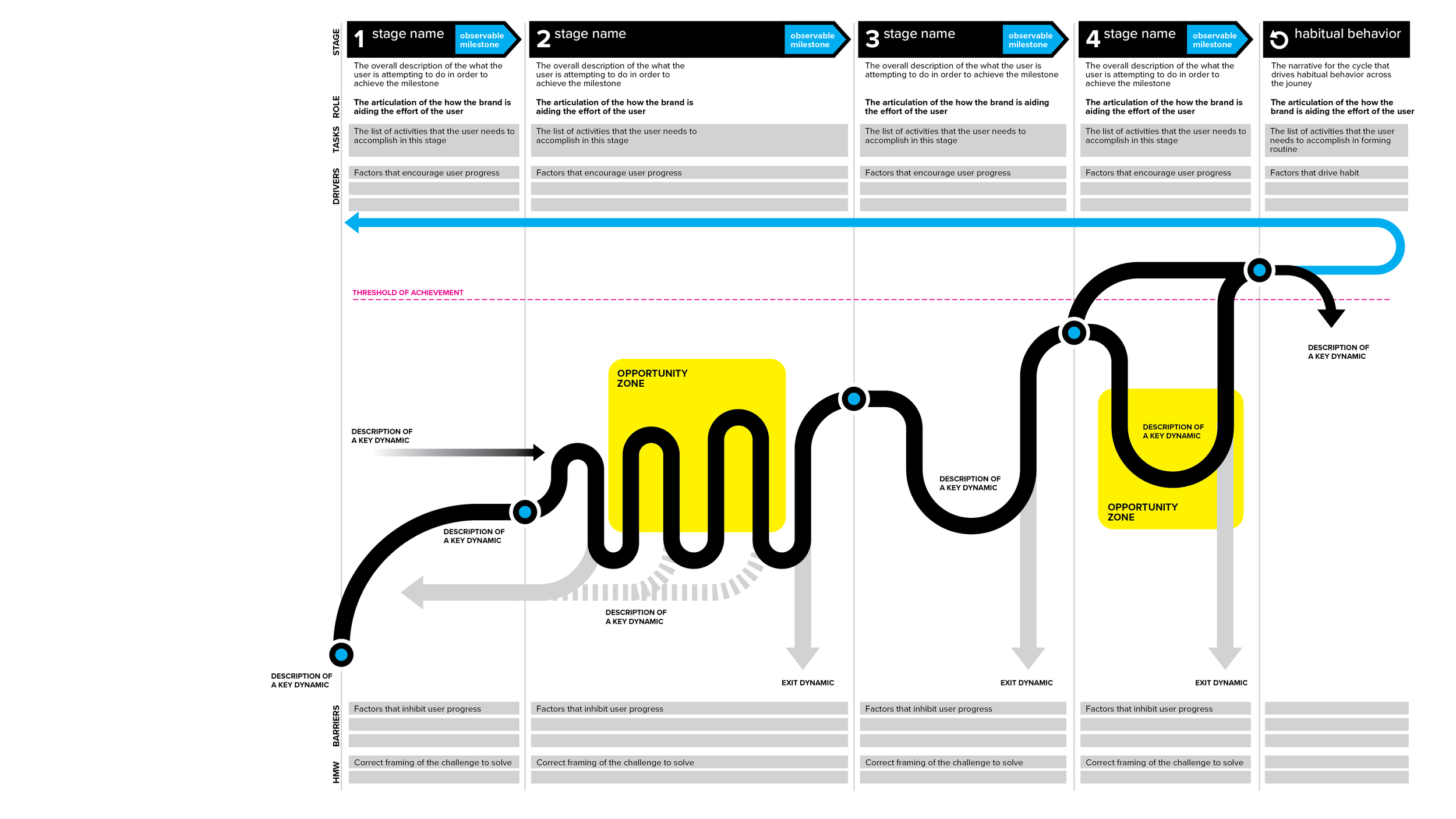
A behavioral journey map: one shared view of goals, milestones, barriers, and leverage across the full customer journey.
Alignment doesn't come from
another deck. It comes from
one shared perspective.
Most organizations already have the insight. What they don't have is a single artifact that holds the whole system, so leadership, design, and engineering work from the same picture instead of interpreting three different summaries of it.
One map beats forty slides
Decks reward depth over legibility. By slide forty, leadership has lost the thread, and the teams building the product are left with a headline instead of the detail they need. A map holds the whole system in one view, so nothing gets lost between the summary and the spec.
Handoffs stop hiding
Most teams only reckon with their own slice of the journey. A map makes dependencies and downstream effects visible by default, not buried in someone else's deck, so a decision in one function shows its cost or benefit in the next.
Move the sub-metrics, move the KPI
A KPI isn't one lever, it's the sum of a dozen smaller ones users clear on the way to their goal. Milestone views turn a vague mandate to move the number into a short list of concrete targets, which beats betting everything on one big swing.
Six moves inside every journey
Click a point on the map to zoom into what's actually happening there.
Ready to see your journey mapped?
We'll walk through what a behavioral journey map would surface for your product, your team, and your KPI.